PM-HW-E8 · Version 0.1 · Content 2026-10-06-r2 · Free access
Learning preview. Content review draft. Planned duration is 480 instructional minutes, excluding breaks. This preview records practice, not verified training hours or certification. Instructor-supported enrollment is being prepared.
Use your browser’s Print command to print or save a PDF. Work with fictional or sanitized information. Keep medical and confidential details out of your notes.
The continuing case: Riverton Reclamation — fictional training site
Riverton is an imagined cleanup site with a container pad, a soil work area, a decontamination corridor and a support area. You are a previously trained field worker assigned to observation and inspection within a defined work plan. You are not assigned to emergency response, container opening or confined-space entry. All conditions, names and documents in this case are invented.
Maya Chen — site safety and health coordinator
Luis Ortega — trained field supervisor
Nadia Cole — monitoring technician
Jon Bell — first-aid coordinator
A. Work briefing
Current HASP: revision 6, September 30, 2026. An old revision 5 remains on the noticeboard. Today’s task: supervised visual inspection from the designated observation location. A new soil-disturbance task is proposed but has not been included in the briefing. The alternate contact and emergency signal have been left blank.
B. Fictional hazard-information extract
Training material only; not a real or complete SDS. Product identifier: Riverton Process Rinse. Section 2 lists flammability and skin/eye irritation. Section 6 refers to the approved release procedure. Section 8 requires task-specific exposure evaluation and material-compatibility data; those data are not supplied. Section 10 identifies incompatible materials. Section 11 describes potential health effects. Section 16 shows a newer revision than the supplier sheet used in the work briefing. Do not use this fictional extract to select real PPE or handle chemicals.
C. Instrument record
A training monitor has oxygen, combustible-gas, carbon monoxide and hydrogen sulfide channels. Its sheet records a passed function check. No accuracy-check record or information establishing coverage of the site’s solvent hazards is supplied. A displayed zero on its combustible-gas channel is only one observation, not a complete exposure assessment. No real instrument settings or entry limits are prescribed in this exercise.
D. Change and incident notes
A phone was carried from the work area into the support trailer before its contamination status was assessed. A forklift route now crosses the planned pedestrian route. An unknown container is described as bulging. During a later exercise, a coworker becomes confused in hot conditions. These are separate fictional events for analysis, not instructions to approach or investigate hazards.
MODULE 1 / 45 PLANNED GUIDED MINUTES
Your role and the work briefing
Outcome: Identify your assignment, responsible people and missing information before a task begins.
A change in excavation or equipment movement belongs in the work briefing: identify the task, affected people and approved controls.
A refresher builds on initial training. At the start of this program, identify the work you actually do and one condition that has changed since your last training. Your initial-training record, field experience and current assignment matter together. A course title does not decide whether you may handle containers, use a respirator or respond to a release. Ask the instructor to resolve any uncertainty about the correct training pathway.
A useful briefing connects a particular task to people, hazards, controls and a plan for changed conditions. In the Riverton case, compare the current plan with the old noticeboard copy. Name the assigned task in one sentence. Then identify what is missing: an alternate contact, the emergency signal, and authorization or assessment for the proposed new work. A signature shows that a record was made; explain-back shows whether the instructions were understood.
Cleanup-site training, treatment/storage/disposal training and emergency-response training are separate pathways. This draft serves the cleanup-site refresher pathway. A response assignment requires its own review. A worker with a refresher certificate should still ask who authorizes the task and which employer procedures apply. For this course, do not turn the fictional site documents into instructions for an actual worksite.
Describe a near miss, confusing instruction or useful improvement from the past year without names, medical details or confidential project information. Separate what was observed from what was inferred. If the event was “a worker skipped a step,” ask whether the step was clear, usable, available and supported by the actual work schedule. Carry one unanswered question forward to the instructor.
Explain which parts need instructor access and appropriate practical training.
Decision exercise
The supervisor offers you the new soil-disturbance task because your annual refresher record is current. The task is missing from today’s briefing. Which response best explains the gap?
Accept it because a refresher covers every site task.
Explain that the new task needs its hazards, controls, role and work-plan requirements addressed before assignment.
Ask only whether the old noticeboard copy has been signed.
Write your choice and explain the evidence: ____________________
Build a briefing you can explain back
State your Riverton assignment and identify two tasks outside it.
List the responsible contact, an alternate-contact gap and one plan-version problem.
Write three questions needed before the proposed new task could be assigned.
Summarize a sanitized prior-year incident or use card D; distinguish observation from inference.
Work product: A one-page task briefing and one learning question.
Practice notes: ____________________
Worked example & worksheet starter
Example: The noticeboard shows revision 5; today’s briefing names revision 6. Ask the responsible supervisor to resolve the applicable approved instructions and remove the conflicting direction.
Assignment: [one sentence]
Outside my role: [two tasks]
Current plan / conflicting copy: [facts]
Responsible contact / missing alternate or signal: [facts]
Questions before changed work: [three]
Prior-year lesson or fictional example: [observation versus inference]
Replace prompts with your reasoning. Examples do not establish completion.
Instructor-led practice
Instructor-led explain-back of a current, approved briefing in a clean training setting. The instructor supplies site-specific contacts and signals for any real course cohort.
Outcome: Use hazard information to identify how a worker could be exposed and what remains unknown.
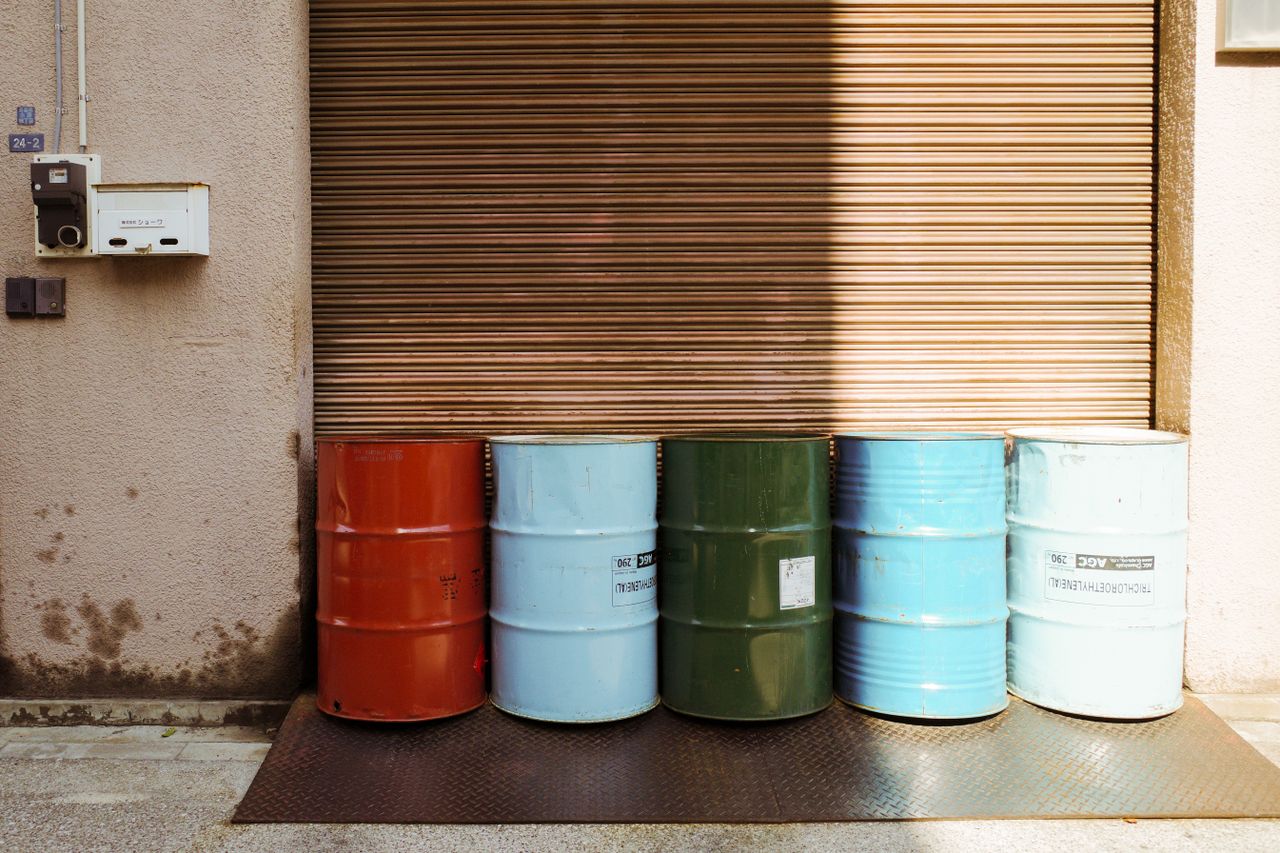
Steel containers provide a useful reference for the container lesson. Their appearance alone does not establish their contents or the handling requirements.
A container’s presence is one fact. How its contents could reach a worker is another. In an exposure map, connect a source, a release or transfer mechanism, a route into or onto the body, and the person or task involved. Include physical hazards around the work as well as chemical concerns. Movement of equipment, unstable footing and changing visibility may matter even when no chemical exposure is demonstrated.
Use the product identifier to check that the label and hazard document match. Relevant SDS sections include hazard identification in section 2, release measures in section 6, handling/storage and incompatibilities in section 7, exposure controls and PPE in section 8, stability/reactivity in section 10, toxicology in section 11, and revision information in section 16. Those sections support different questions. Finding a hazard description is not the same as finding task-specific protection data.
The fictional Process Rinse card omits exposure measurements and compatibility data. Record those omissions instead of guessing them. Do not identify an unknown material by opening, tasting, touching or deliberately smelling it. A label, inventory and sampling result may describe different stages of the material’s history; discrepancies belong in the review. The Riverton exercise asks you to recognize missing information, not to perform sampling.
Describe the consequence without guessing a diagnosis
Inhalation, skin contact, eye contact and ingestion through contaminated hands are different possible pathways. A worker can report the task, material information, timing and symptoms without diagnosing an illness. Acute effects and delayed effects deserve attention. Refer questions about clinical interpretation and required medical evaluation to the appropriate occupational-health process.
A faded container label does not match the available hazard sheet. A coworker proposes opening the lid to identify the odor. What evidence-based action fits your inspection role?
Compare the smell with the sheet’s odor description.
Choose gloves from the nearest shelf and inspect the liquid.
Record the identity mismatch, keep within the authorized inspection role and request qualified identification through the site process.
Write your choice and explain the evidence: ____________________
Map the missing evidence
Find the card sections that address hazards, protection, reactivity and revision.
Map two possible exposure pathways in the fictional task.
Identify three missing facts that could change a work decision.
Write a short report containing facts and questions, without declaring a chemical identity.
Use the signs and labels reference: distinguish a chemical label, a waste label and an access warning; identify the SDS storage information needed.
Work product: An exposure-pathway table with a separate unknowns column.
Practice notes: ____________________
Worked example & worksheet starter
Example: Possible residue on a phone → hand-to-desk transfer → later skin contact → next user. Contamination status is unknown; request review through the site procedure. This is a possible pathway, not a confirmed exposure.
Replace prompts with your reasoning. Examples do not establish completion.
Instructor-led practice
Instructor guides use of actual, current hazard information for a harmless document exercise. No chemical handling or sampling is part of the document activity.
Outcome: Explain what a monitoring observation supports, its limits and the controls needed for the task.
Industrial settings can contain interacting chemical and physical hazards. Training starts with the task, the site information and the people responsible.
Before using a result, ask what was measured, where and when it was measured, which instrument and sensor were used, and what task or condition the result represents. A measurement at one location is not proof of conditions elsewhere or later. A sensor intended for one hazard does not answer every exposure question. The Riverton monitor’s channels leave an obvious question about the solvent hazards.
A function or bump test checks whether gas reaches sensors and alarms respond. It does not itself measure accuracy. Calibration checks and full calibration serve different purposes under manufacturer instructions. A passed check is evidence about that check, not blanket permission to enter. Instrument selection, verification, sampling methods and action criteria belong to the approved monitoring program and trained users.
The hierarchy of controls helps ask whether a hazard can be removed, substituted or controlled through equipment or design before relying on worker procedures and PPE. For this exercise, propose options and name the evidence needed to evaluate them. Do not assume that “more PPE” is the most effective answer to an uncontrolled process. A control also needs verification: what observation would show that it is working for this task?
Conditions can change when work disturbs material, equipment moves, ventilation changes or the weather affects a task. Identify the trigger and the person responsible for reassessment. Site zones, communications and routes serve the actual hazard assessment; lines on a map are not permanent guarantees. If a result or alarm changes, follow the approved response and communicate it rather than changing an instrument setting to keep the job moving.
Compare a function check with accuracy verification and identify the manufacturer’s instructions needed.
Decision exercise
The combustible-gas channel reads zero. The record does not establish solvent-hazard coverage, and the planned task will disturb soil. What conclusion is justified?
The zero is one limited observation; task-relevant coverage, instrument verification and the changed condition still need evaluation.
All inhalation hazards are absent because a gas monitor was used.
The worker can substitute an odor check for the missing coverage.
Write your choice and explain the evidence: ____________________
Audit the fictional monitoring record
State what the record actually says and what it does not establish.
Explain the difference between a function check and accuracy verification.
Propose one design/control option and the evidence needed to evaluate it.
Identify two changes that should trigger a briefing or assessment update.
Work product: A monitoring-evidence review and control-verification question.
Practice notes: ____________________
Worked example & worksheet starter
Example: A zero combustible-gas reading is recorded; the card does not establish solvent coverage. Ask the monitoring-program owner to evaluate task-relevant coverage before relying on that result.
What was measured / where / when: […]
Sensor coverage and limitations: […]
Function check versus accuracy evidence: […]
Changed task or conditions: […]
Control option | decision owner | evidence needed | verification: […]
Replace prompts with your reasoning. Examples do not establish completion.
Instructor-led practice
A trained instructor demonstrates the cohort’s instrument in a clean setting using manufacturer instructions. Learners practice only the steps authorized for that equipment and are observed. No actual hazardous atmosphere or exposure is created.
Outcome: Identify the evidence and program checks needed before using the task’s assigned protection.
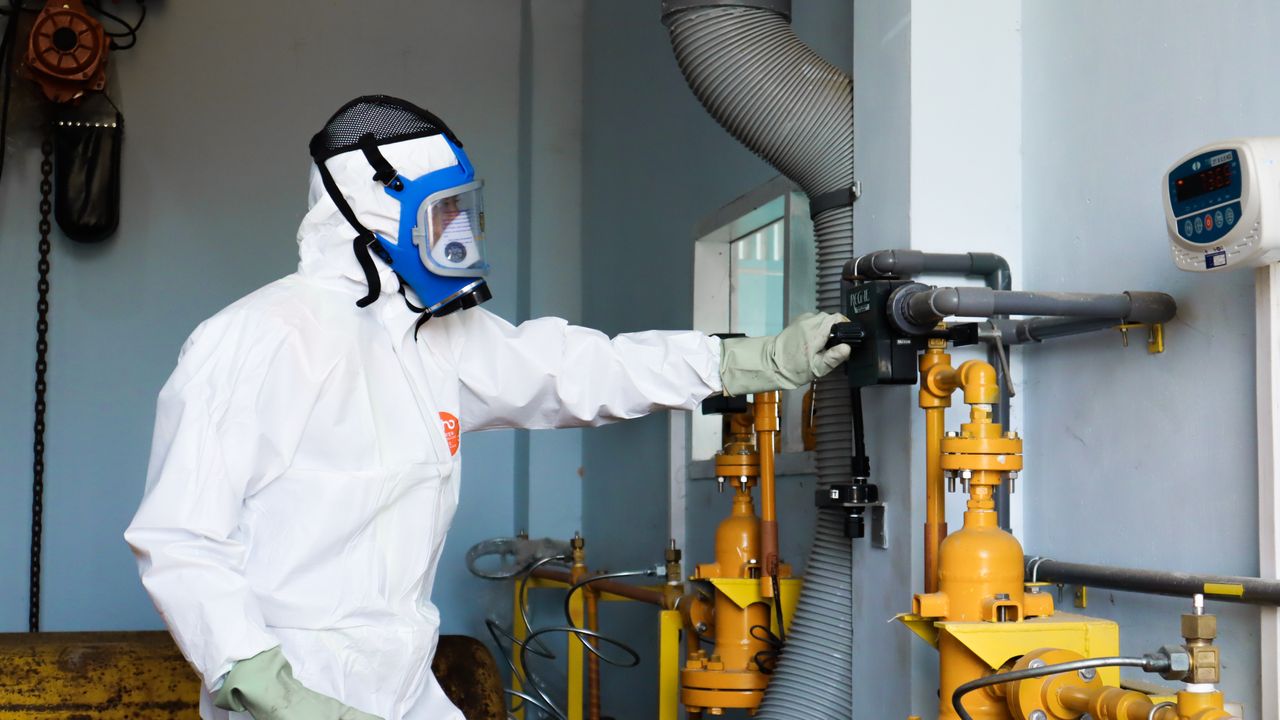
Protective clothing and respiratory equipment in an industrial setting. The task's hazards, compatibility data and employer program determine appropriate protection.
Photo: Govin MU / Pexels. Illustrative setting; Riverton is fictional.
Protection is a system
A suit, glove or respirator has limitations. Ask whether the complete ensemble matches the material, task, exposure and duration, and whether items interfere with each other. Generic level names do not supply material-compatibility data or establish that a worker can safely use the ensemble. Levels A through D are broad descriptions in OSHA’s nonmandatory guidance, not a substitute for task-specific selection.
Required respirator use involves an employer respiratory-protection program. Medical evaluation precedes fit testing or required use. A tight-fitting facepiece must be fit tested before initial use, when its make, model, style or size changes, and at least annually; changes affecting fit may require additional testing. Perform a user seal check each time it is put on. A seal check is not a fit test. This refresher does not provide medical clearance or perform either check.
An air-purifying respirator does not supply oxygen. Under 1910.134(d)(1)(iii), when the employer cannot identify or reasonably estimate the employee’s exposure, the atmosphere must be considered immediately dangerous to life or health (IDLH). Do not enter using an available cartridge or improvise a rescue. Refer the task to the respiratory-program administrator and the approved emergency process; IDLH work requires separate selection, trained roles and protective arrangements. Cartridge replacement for an authorized task uses the employer’s service-life information, not smell.
Use clean equipment, instructor-selected procedures and any required medical/program prerequisites. Inspect for damage, identify maintenance or replacement needs, and demonstrate the approved use sequence. The instructor should observe performance rather than accept a checked box. If equipment, fit or conditions differ from what the task requires, state that mismatch plainly. Heat load, vision, mobility and communication are part of the ensemble review.
Video and reading links open in a new tab. Internet access is required; your course stays open.
Pair this 2012 video with the current respiratory protection standard and your employer’s program. Watching a demonstration does not perform your fit test.
Connect it to the lesson
Fit testing applies to the specific facepiece make, model, style and size.
A user seal check does not replace a fit test.
Your reflection
Your assigned tight-fitting facepiece differs from the model used in your fit test. What must you resolve with the respiratory-program administrator before use, and why is a seal check insufficient?
Explain why a protection-level name still needs task-specific selection evidence.
Decision exercise
The assigned tight-fitting respirator is a different facepiece model from the worker’s fit-test record. The worker says the straps feel snug. What resolves the issue?
Snug straps prove that the prior fit test transfers to the new model.
Use a successful seal check to substitute for a fit test on the changed model.
Review the model change with the respiratory-program administrator and meet the applicable fit-testing and use requirements before the task.
Write your choice and explain the evidence: ____________________
Build a protection evidence table
For the fictional task, list material, exposure and compatibility information still needed.
Distinguish medical evaluation, fit testing, seal check and training.
Name two possible ensemble conflicts affecting the job.
Record what the instructor must observe in clean equipment practice.
Explain the required IDLH treatment when exposure cannot be identified or reasonably estimated, and who must resolve the task.
Work product: A PPE evidence table and observed-practice record.
Practice notes: ____________________
Worked example & worksheet starter
Example: A facepiece model differs from the fit-test record. A seal check does not resolve that difference. Refer it to the respiratory-program administrator before required use.
Hazard / concentration / compatibility evidence: […]
Unknown-exposure IDLH rule and referral: […]
Medical evaluation | fit test | seal check | training: [different purposes]
Ensemble conflicts: [two]
Instructor observation needed: […]
Replace prompts with your reasoning. Examples do not establish completion.
Instructor-led practice
Qualified instruction with clean equipment appropriate to assigned duties. Actual respirator wear requires relevant employer medical, fit and program prerequisites. Document observed performance and remediation; do not use a generic course video as the observed check.
Outcome: Trace contamination transfer and explain the approved movement of people and equipment.
Trace the transfer
Decontamination planning considers the worker, protective equipment, tools, vehicles and items carried between work and support areas. The phone in card D creates a useful question: where was it, what could it have contacted, and which surfaces or people could it contact next? The absence of visible residue does not settle contamination status. Document the pathway instead of treating “looks clean” as a test result.
The site plan establishes work zones, access, communications and the decontamination arrangement. Review who operates each part and how the route changes if the task or conditions change. Keep clean items from crossing into the contaminated flow. The Riverton map is only a reasoning exercise; its boundaries and distances must not be copied into a real site plan.
Removal, cleaning or disposal decisions depend on the contaminant, equipment, materials and approved procedure. A universal solvent or rinse recipe would ignore compatibility and waste considerations. Ask the instructor to demonstrate the site’s selected method with clean training equipment. Consider collected residues and rinse material as part of the planned waste pathway, not a housekeeping afterthought.
Emergency decontamination and medical response need coordination. Avoid improvising a slow routine when a person needs urgent care, and avoid sending contamination into a support area without warning responders. Follow the employer’s emergency procedure and provide responders with the available hazard and contamination information. The learner’s task here is communication and role recognition, not prescribing chemical first aid.
The cleanup-site control program includes a buddy system alongside its map, work zones, communications and emergency alerts, safe work procedures, and nearest medical assistance. Each worker in a work group is assigned observation by at least one other worker so rapid assistance can be arranged. Establish who observes whom, how they communicate, how loss of contact is reported, and who activates emergency help. Being somewhere on the same site is not an observation arrangement. A buddy must stay within assigned training and duties; the system does not authorize an unprotected rescue or confined-space entry.
A worker places the phone from card D on the support trailer desk before its contamination status has been addressed. What should the review focus on?
Only whether the phone has visible dirt.
The possible transfer pathway, affected items or people, and the site’s approved control/decontamination response.
Replace the phone and leave the desk and possible next-user contacts out of the review.
Write your choice and explain the evidence: ____________________
Draw the contamination pathway
Trace the phone from work area to hand, desk and next user.
Draw separate planned clean and contaminated flows without prescribing real safety distances.
Identify the responsible roles and two missing decontamination facts.
Explain what information emergency responders would need if urgent care were required.
Identify the observer for each worker in your clean training group, the communication method and the approved response to loss of contact.
Work product: A contamination-flow diagram and communication note.
Practice notes: ____________________
Worked example & worksheet starter
Example: The phone may connect the work area to a clean support desk. Identify possible contact points and the approved review process. In clean practice, assign who observes each worker and rehearse an emergency alert.
Possible transfer: work area → phone → hand → desk → next user
Evidence versus unknowns at each arrow: […]
Planned contaminated flow: [describe or draw the site-selected route]
Separate clean flow: [describe or draw; no invented safety distances]
Buddy observer | communication | lost-contact response: […]
Urgent-care hazard information / responsible contact: […]
Replace prompts with your reasoning. Examples do not establish completion.
Instructor-led practice
Use clean mock tools and clothing only. Instructor observes movement through the chosen training sequence and corrects cross-contact. No chemical, powder, biological agent or contamination surrogate is required. Rehearse assigned buddy observation, an emergency alert and reporting a lost-contact condition without entering any hazardous area.
Outcome: Recognize conditions needing specialist assessment and avoid expanding an assignment without preparation.
Steel containers provide a useful reference for the container lesson. Their appearance alone does not establish their contents or the handling requirements.
Container identity, condition, position and surrounding work matter together. A bulging or damaged container calls for assessment and an appropriate handling plan; the fact that it is in the way does not authorize a worker to move or open it. In this case your assignment remains visual inspection from the designated location. Record what can be observed safely and communicate it through the site process.
Traffic, lifting equipment, excavations, stored energy, electrical systems, slips and weather can interact with chemical hazards. For the crossed forklift and pedestrian routes, locate the conflicting activities and ask who controls each one. “Watch out” leaves the layout problem unresolved. Consider whether a route, access arrangement or work sequence can be changed and how its effectiveness would be checked.
A tank, pit or vault may raise confined-space questions. This refresher does not designate you an entrant, attendant or rescuer. Entry and rescue need the appropriate space evaluation, procedures, trained roles and arrangements. Likewise, this course is not forklift-operator, excavation or hazardous-energy task qualification. Identifying the interface is a useful skill; improvising the other program is not.
A useful report describes the task, condition, location, people potentially affected and the question needing a decision. Avoid minimizing uncertainty as “probably fine.” Also avoid presenting an unverified worst-case story as an observed fact. The responsible person needs enough accurate information to assess the change and update the work plan.
Video and reading links open in a new tab. Internet access is required; your course stays open.
This industrial incident illustrates hazards relevant to cleanup work. Apply it to recognition and reporting within your assigned role; use the storage reference for the actual compliance examples.
Connect it to the lesson
The 2016 MGPI incident involved a delivery connected to the wrong chemical fill line.
Clear identification needs equipment safeguards and agreed responsibilities to support it.
Your reflection
At Riverton, a container label and the available hazard information do not match. What should you report, who should resolve the discrepancy, and what safeguard could help prevent a similar identification error?
A bulging, unidentified container blocks the revised pedestrian route. You are assigned inspection, not handling. Which report supports a safe decision?
Identify the condition and route conflict, keep within the inspection assignment, and request the site’s qualified assessment and handling/route decision.
Move it first so that pedestrians are protected sooner.
Open it slightly to see whether pressure is present.
Write your choice and explain the evidence: ____________________
Paper hazard walk
Identify at least four interacting hazards from the site cards.
Separate observations from assumptions.
Choose one proposed layout or sequence improvement and its verifier.
Write a report that identifies when another task-specific program must be involved.
Use the tank reference to separate location from design pressure and list the records needed.
Choose a storage example: state its assumptions, one gap and the document or responsible person needed to resolve it.
Work product: A hazard-interaction register with an owner for each unresolved item.
Practice notes: ____________________
Worked example & worksheet starter
Example: A bulging container obstructs the changed pedestrian route. The observer reports both conditions; a qualified person must assess the handling and route decision. Shape alone does not establish the tank’s classification.
Row — Observed condition | interacting task | unknown evidence | decision owner | verification
Rows: [at least four]
Tank location versus pressure classification: […]
Storage example: assumption | positive feature | gap | source section | person/document needed
Separate work program needed: […]
Replace prompts with your reasoning. Examples do not establish completion.
Instructor-led practice
Instructor-led photo, diagram or clean-area observation exercise. Do not approach actual suspect containers, enter spaces or operate equipment for this exercise.
Outcome: Communicate an urgent condition and follow the assigned emergency role without creating additional casualties.
Know the assigned response
An incidental release and an emergency are not distinguished solely by the size of a spill. Material, exposure potential, conditions, available controls and trained response capability matter. An unplanned action can change an inspection assignment into a response assignment. Identify your alarm, notification, evacuation and accountability duties in the actual emergency plan. The fictional course contact list is not an emergency directory.
From a safe location, communicate what happened, where, who may be affected, the known hazards, what is unknown and how responders can contact the responsible site person. Use the site’s emergency process and summon emergency services as needed; do not wait for a routine message to be read when urgent help is required. Avoid entering a contaminated or unknown atmosphere to obtain a better report.
Confusion, altered mental status, loss of consciousness or seizures in hot work conditions can indicate a life-threatening heat illness. Call 911, activate the site emergency plan and arrange prompt cooling and assistance without exposing helpers to another hazard. Sweating does not rule out heat stroke. This lesson does not diagnose the worker or replace first-aid instruction and the employer’s heat/emergency arrangements.
Recognize warning signs using the actual hazards and current hazard information. In the fictional Process Rinse card, skin and eye irritation are listed possible effects. A report of new eye stinging or skin irritation after a task is a possible overexposure warning, not proof of a chemical identity or diagnosis. Promptly report the task, timing, location, known material information and observed warning signs through the employer’s health and emergency arrangements; summon urgent help when needed. Possible illness or symptoms require attention even if exposure lasted less than 30 days. A qualified clinician determines medical evaluation and follow-up. Keep personal symptoms, diagnoses and medical forms out of public course notes; use the fictional example here.
OSHA HAZWOPER standard1910.120(e)(2)(vi), (f)(2)(iii), (f)(3): warning signs and evaluation
Who needs medical surveillance?
For cleanup-site work, 1910.120(f)(2) covers workers who are or may be exposed at or above a permissible exposure limit, or above a published exposure level when no PEL exists, for 30 or more days per year, regardless of respirator use; workers wearing a respirator for 30 or more days per year or as required by 1910.134; workers injured, ill or showing signs or symptoms from possible overexposure during hazardous-waste operations or emergency response; and HAZMAT team members. The employer reviews actual duties and exposure records to determine coverage. Workers covered by the ongoing exposure, respirator-use or HAZMAT-team criteria generally need examinations before assignment, at least annually unless the physician sets an interval of no more than two years, and at termination or reassignment unless examined in the preceding six months. Signs, symptoms and emergency exposures trigger prompt evaluation and clinician-directed follow-up under (f)(3), rather than waiting for an annual appointment. Required examinations are provided without employee cost or lost pay. Respirator medical evaluation is a separate program requirement; this course does not determine medical fitness.
Find the covered worker groups, periodic examination timing and prompt evaluation triggers. Explain the response to a fictional possible-overexposure warning.
Compare available information with the facts still needed by responders.
Decision exercise
A coworker becomes confused in hot conditions near the work area. Someone says sweating means heat stroke is impossible and proposes waiting. What is the appropriate decision?
Wait until the coworker stops sweating.
Treat confusion as an urgent warning, summon emergency medical help and follow the site’s safe emergency/cooling response.
Offer water and wait for the next break without activating emergency help.
Write your choice and explain the evidence: ____________________
Practice an emergency notification
Write a 30-second notification using only the facts in card D.
Identify your assigned duties and an action outside your role.
Explain how you would report missing persons at the designated accountability point.
State what hazard information responders need and which medical information stays private.
Using fictional workers, explain why 35 days of qualifying exposure, 35 days of respirator wear, and irritation after a single possible exposure each need employer medical-process review. Identify prompt versus periodic evaluation; do not diagnose.
Work product: A notification script and role/accountability card.
Practice notes: ____________________
Worked example & worksheet starter
Example: Card D describes confusion in hot conditions. Treat it as an urgent warning and summon emergency medical help using the safe site response. Separately, fictional new eye irritation after a task warrants prompt reporting and medical-process review; it is not a diagnosis.
Emergency report: location | observed condition | people affected | known hazards | unknowns | site contact
My role / outside my role / accountability report: […]
Fictional irritation warning: task | timing | location | reporting process
35 qualifying-exposure days: coverage reason / employer reviewer
35 respirator days: coverage reason / employer reviewer
Single possible overexposure with irritation: prompt evaluation reason
Periodic versus prompt examination timing: […]
Question for instructor: […]
Replace prompts with your reasoning. Examples do not establish completion.
Instructor-led practice
Instructor conducts a tabletop notification and accountability exercise. No live alarm, actual emergency call, hazardous release or entry rescue is performed. Include a fictional possible-overexposure notification and a coverage/timing explain-back using 1910.120(f)(2)–(3).
Outcome: Explain a corrective action, demonstrate scenario reasoning and identify remaining task-specific needs.
Look beyond the last person in the chain
Review an incident or near miss by building a sequence: intended task, available information, changed condition, action, result and response. Ask which control or communication failed and which evidence supports that conclusion. “The worker should be more careful” is not an adequate analysis of a route conflict or a confusing work instruction. Use actual sanitized prior-year experience where available; use the fictional case to supplement, not silently replace, relevant employer review.
A corrective action needs an owner, a specific change and a way to check whether it worked. “Retrain everyone” may be appropriate for a knowledge gap but not for every problem. For the phone event, route conflict or outdated briefing, propose an operational improvement as well as any instruction needed. The owner should be able to describe what successful implementation looks like.
In the capstone, use the revised task request, hazard-information mismatch, monitor limitation and route conflict together. Decide which facts are established, which questions remain, and who can resolve them. You are being assessed on reasoning within your role, not on inventing a PPE specification, entry threshold or container-opening method.
Knowledge results, completed exercises, actual instructional participation, practical observations and instructor review answer different questions. The browser preview provides practice feedback only. In a delivered program, the qualified instructor reviews those records and any needed remediation before a completion document is issued. The employer still determines site/task readiness and additional training needs.
Connect a prior-year incident to an action, an owner and evidence that the improvement works.
Decision exercise
A learner finished the preview pages and scored well on the knowledge questions, but no instructional attendance or equipment practice has been verified. What can PeopleMach honestly record?
A fully verified 8-hour refresher because all page buttons were clicked.
Medical clearance and unrestricted cleanup-site authorization.
Practice progress and assessment results, with training participation and required practical review still unresolved.
Write your choice and explain the evidence: ____________________
Integrated capstone
Prepare a five-line fact/unknown list for the new soil task.
Identify the plan, hazard information, monitoring and route changes that need resolution.
Assign an appropriate decision owner to each gap without inventing a technical prescription.
Propose one corrective action from the prior-year or fictional incident and how it will be verified.
Write your task-specific learning needs to discuss with the instructor and employer.
Work product: A capstone decision record and corrective-action follow-through.
Practice notes: ____________________
Worked example & worksheet starter
Example: A current refresher record alone does not resolve the unbriefed soil task, missing exposure information or intersecting routes. Assign each gap to the appropriate responsible person and state the evidence still needed.
Facts / unknowns: [five lines]
Plan gap | hazard-info gap | monitoring gap | route gap: […]
Decision owner for each: […]
Corrective action | owner | verification: […]
Initial assessment attempt / remediation / reassessment references: […]
Task-specific learning questions: […]
Replace prompts with your reasoning. Examples do not establish completion.
Instructor-led practice
Qualified instructor reviews the capstone, module work and practical observations. Document correction of critical errors rather than using the overall quiz average to hide them.
Sources checked 2026-10-06. Federal general-industry examples for cleanup-site hazard recognition. Confirm the actual jurisdiction, material, activity and facility program. State environmental rules, OSHA State Plans, permits and local fire codes may add requirements. These examples do not establish treatment/storage/disposal qualification or certify a storage installation.
Recognize the message
These teaching redraws show source-defined wording and sign classes. They are not installation-ready artwork or evidence of OSHA approval. Select and install actual signs under the applicable program and design standard.
OSHA example wording
Permit-required confined space
DANGERPERMIT-REQUIRED CONFINED SPACE
DO NOT ENTER
Training example
Where permit spaces exist, inform exposed employees of their location and danger using danger signs or another equally effective means. A sign does not authorize entry.
The cabinet must carry conspicuous “Flammable - Keep Fire Away” wording. The sign alone does not establish cabinet construction or storage suitability.
For the LQG central-accumulation example, conspicuous No Smoking signs are required wherever the waste presents that hazard. Ignition control also requires actual precautions.
This is a waste label for the LQG central-accumulation case. Hazard indication and a visible start date accompany the words Hazardous Waste. It is not a complete shipped-chemical label.
Shipped chemical labels include the product identifier, signal word, hazard statements, pictograms, precautionary statements and the responsible party’s name, address and phone. The hazard classification determines the elements; special provisions apply to some shipments or small containers. Workplace labeling has its own options under (f)(6); stationary process containers may use accessible alternatives under (f)(7). Match the material to the SDS.
Recognize the flame, flame over circle, exploding bomb, skull and crossbones, corrosion, gas cylinder, health hazard and exclamation mark. The environment symbol also appears on OSHA’s artwork page; it is not mandatory under OSHA HazCom. A symbol alone does not give the full hazard classification.
The generator category, waste type and accumulation arrangement determine the label and time rules. A waste label may need Hazardous Waste, a hazard indication and accumulation records; the example’s date rule must not be applied to every tank or satellite container.
Transport placarding depends on the material’s transport classification, package and applicable quantity rules. Refer shipping decisions to trained personnel. A DOT class number does not establish a worker’s exposure level or permission to enter.
Open OSHA’s official sheet to see the hazard symbols and downloadable public-domain artwork. Use the accompanying hazard statements and SDS; do not infer an exposure concentration from a symbol.
An aboveground tank can also be atmospheric or pressure-rated. These silhouettes help recognize vocabulary; verify the classification from records, never shape alone.
Location
Aboveground storage tank (AST)
Illustrative schematic · not to scale
Shown above grade. The stored material and activity determine the rules: oil, hazardous waste and flammable product storage follow different programs.
Evidence to requestInventory, material identity, installation records and applicable facility plan.
EPA’s UST definition includes connected underground piping: at least 10% of combined volume is underground. Federal coverage depends on contents and exclusions; state programs may differ.
Evidence to requestTank/piping records, regulated status and applicable release-detection, spill/overfill and corrosion-protection records.
OSHA 1910.106 defines a portable tank as a closed container over 60 US gallons, not intended for fixed installation. A tote’s shape does not establish approval for a particular liquid.
Evidence to requestCapacity, marking, construction and documented material compatibility.
Record whether equipment is a movable container, portable tank or fixed tank system. A plastic IBC or metal drum is not automatically suitable for any chemical; capacity, markings, compatibility and applicable construction requirements need review.
For federal LQG hazardous waste tanks, 262.17(a)(2) incorporates applicable tank-system requirements in 265 Subpart J. Under 262.17(a)(5)(ii), Hazardous Waste and a hazard indication are accompanied by inventory/monitoring records demonstrating the applicable 90-day residence limit. The container start-date label example is not the entire tank rule.
A tank is above ground. Does that tell you whether it is atmospheric, low-pressure or a pressure vessel?
No. Aboveground describes location. Design-pressure documentation answers the separate pressure-classification question.
Check the rule, then the evidence
Each example starts with its assumptions. The positive features below satisfy selected checks; a complete compliance review also needs the other applicable requirements, records and site conditions.
01
OSHA · flammable liquids
Product storage in a flammable cabinet
Illustrative schematic · not to scale
Assume this caseCategory 2 flammable liquid; 40 gallons total in approved closed containers in a suitable storage cabinet. This is product storage, not the hazardous waste example.
Positive features to verify
Inventory is below the 60-gallon Category 1–3 cabinet limit. The required cabinet wording is visible.
Gaps that need review
A 70-gallon Category 2 inventory would exceed that cabinet limit. A label cannot prove construction or resolve incompatibility.
Supporting documents
SDS section 7 and inventory
Cabinet construction and container suitability
Ignition control, access and local fire-code review
A marked cabinet holds 70 gallons of Category 2 liquid. Is the sign enough?
No. The inventory exceeds the stated cabinet limit. Report the discrepancy for the responsible person’s storage review; do not improvise a transfer.
02
EPA · LQG central accumulation
Hazardous waste drums in central accumulation
Illustrative schematic · not to scale
Assume this caseFederal large quantity generator (LQG), central accumulation, ordinary 90-day case without a special extension. The example waste is ignitable.
Positive features to verify
Closed, compatible containers in good condition; Hazardous Waste, a hazard indication and visible start dates. At least weekly central-area inspections check deterioration and leaks.
Gaps that need review
An unattended open funnel, missing start date or overdue waste needs action. Incompatible waste needs separation or protection. Ignitable/reactive containers need property-line review: generally 50 feet, unless documented fire-authority approval allows less.
Supporting documents
Waste determination, generator category and dates
Inspection results and corrective actions
Compatibility, ignition precautions and any written fire-authority approval
The drum is labeled, but its funnel is left open between additions. What is missing?
Closure between additions. Labeling does not replace container-management requirements. Report it through the site procedure; trained personnel own corrective handling.
03
EPA · satellite accumulation
A different rule at the point of generation
Illustrative schematic · not to scale
Assume this caseAn eligible SQG or LQG satellite area at or near generation, under the operator’s control; 20 gallons of non-acute hazardous waste. Acute waste has separate, much smaller limits.
Positive features to verify
Compatible, good-condition containers with Hazardous Waste and a hazard indication; closed except for the rule’s specified exceptions.
Gaps that need review
A satellite area is not a central area with a different sign. Exceeding the applicable quantity limit triggers dated excess accumulation and action within three consecutive calendar days.
Supporting documents
Area eligibility and operator control
Non-acute versus acute waste determination and quantity
Closure, labeling and the applicable excess-accumulation procedure
Should the central-area 90-day date rule be copied onto every satellite example?
No. Establish the actual accumulation arrangement first. Satellite excess rules and central-accumulation rules differ; state requirements also need review.
04
EPA · SPCC bulk oil storage
Bulk oil tank with secondary containment
Illustrative schematic · not to scale
Assume this caseA non-production onshore facility confirmed subject to SPCC; ordinary bulk oil storage under 112.8(c)(2), not a mobile-refueler exception. Largest tank capacity: 1,000 gallons.
Positive features to verify
The applicable rule calls for containment of the largest single container’s entire capacity plus precipitation freeboard, with sufficiently impervious containment.
Gaps that need review
A basin described as “1,100 gallons” or “110%” is not enough evidence. Verify usable volume after displacement, precipitation allowance, condition and the facility’s drainage controls.
Supporting documents
SPCC applicability and the facility plan
Tank capacity and reviewed net containment calculation
Inspection, integrity and drainage-control records
Does a nominal 1,100-gallon basin automatically make a 1,000-gallon tank compliant?
No. The figure does not prove usable containment plus precipitation freeboard or satisfy the other applicable requirements. A qualified facility review must verify the calculation and controls.
Applicability comes first
Have the responsible facility team confirm generator category, accumulation area, material and jurisdiction. For SPCC, applicability depends on facility activity, aggregate oil storage capacity, discharge potential and exclusions. Do not apply the oil-tank example to every chemical tank.
You see an unmarked, bulging container outside your inspection route. Should you open it to identify the contents?
No. Keep to the assigned safe location and report identity, condition and uncertainty. The site’s qualified personnel assess the hazard and handling plan.
OSHA resources across the course
Use the regulation for requirements. OSHA bulletins, recommended practices, FAQs and nonmandatory appendices help explain them and are identified below. Official documents open on the source website; the workbook includes the same references.
Find the covered worker groups, periodic examination timing and prompt evaluation triggers. Explain the response to a fictional possible-overexposure warning.
Connect a prior-year incident to an action, an owner and evidence that the improvement works.
Final review
Discuss written work, appropriate practical observations and unresolved questions with a qualified instructor. Actual instructional participation and practical coverage must be verified. This workbook does not issue a certificate.